Every job below is one we do ourselves across Rockaway Beach.
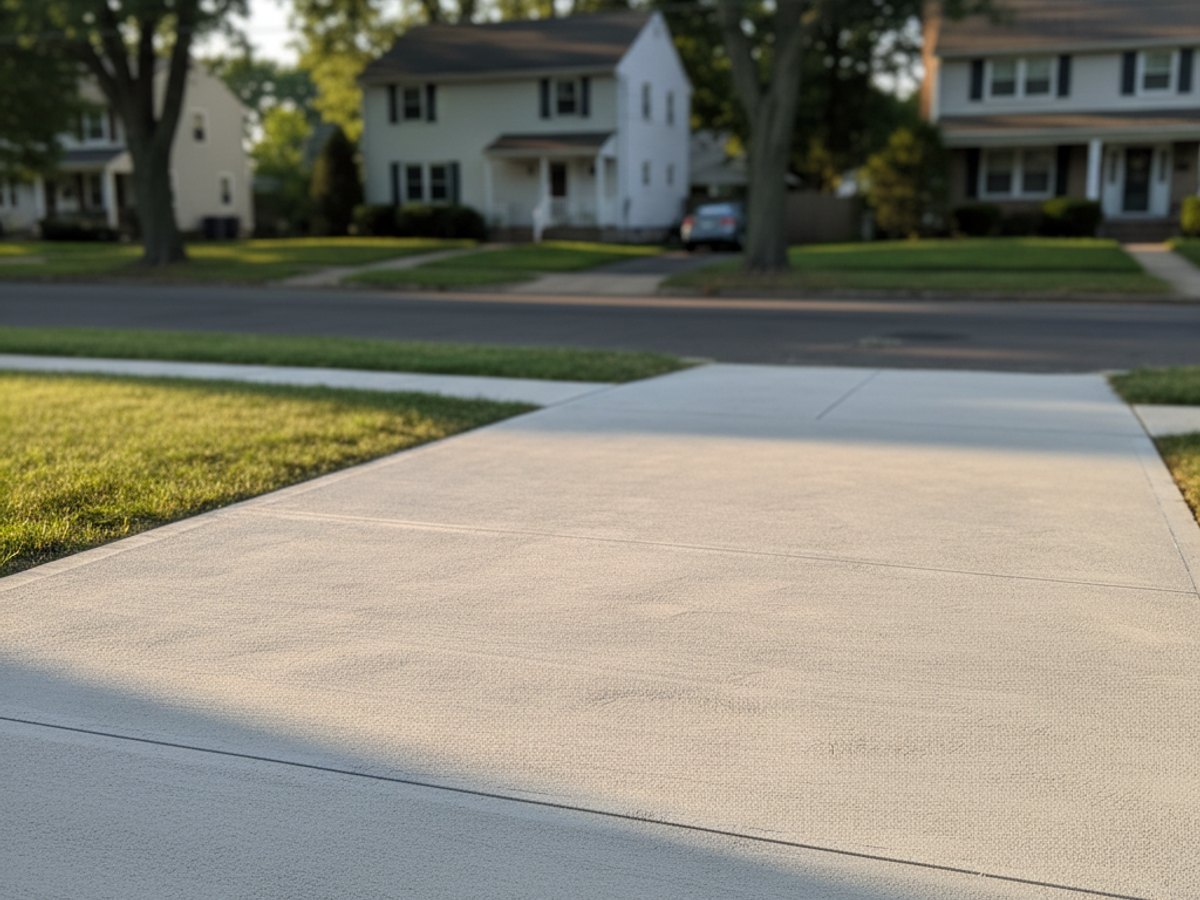
A residential driveway takes years of car weight, so we run rebar through anything wider than a single car width and grade the base to shed water away from your garage. We pour a minimum four-inch slab, more if you're parking anything heavier than a pickup.
We pitch patios a quarter inch per foot away from the house so water doesn't pool against your foundation or siding. Broom finish, exposed aggregate or a stamped pattern, the base prep underneath matters more than the finish on top.
Stamped concrete gets you the look of stone, slate or brick at a fraction of the cost, using texture mats pressed into the slab before it sets. Color hardener and release agent go down the same day, so timing the pour right matters more here than on plain gray concrete.
Front walks are usually four feet wide and four inches thick, tied into control joints every four to six feet so they crack where you want them to, not across the middle. We deal with the frost heave along the path from the sidewalk to your door, which is where most cracked walkways start.
Steps get poured to code rise and run so nobody's tripping on an uneven step, and new stoops get tied into the house foundation properly instead of just butted against it. Failing stoops are one of the more common repair calls we get.
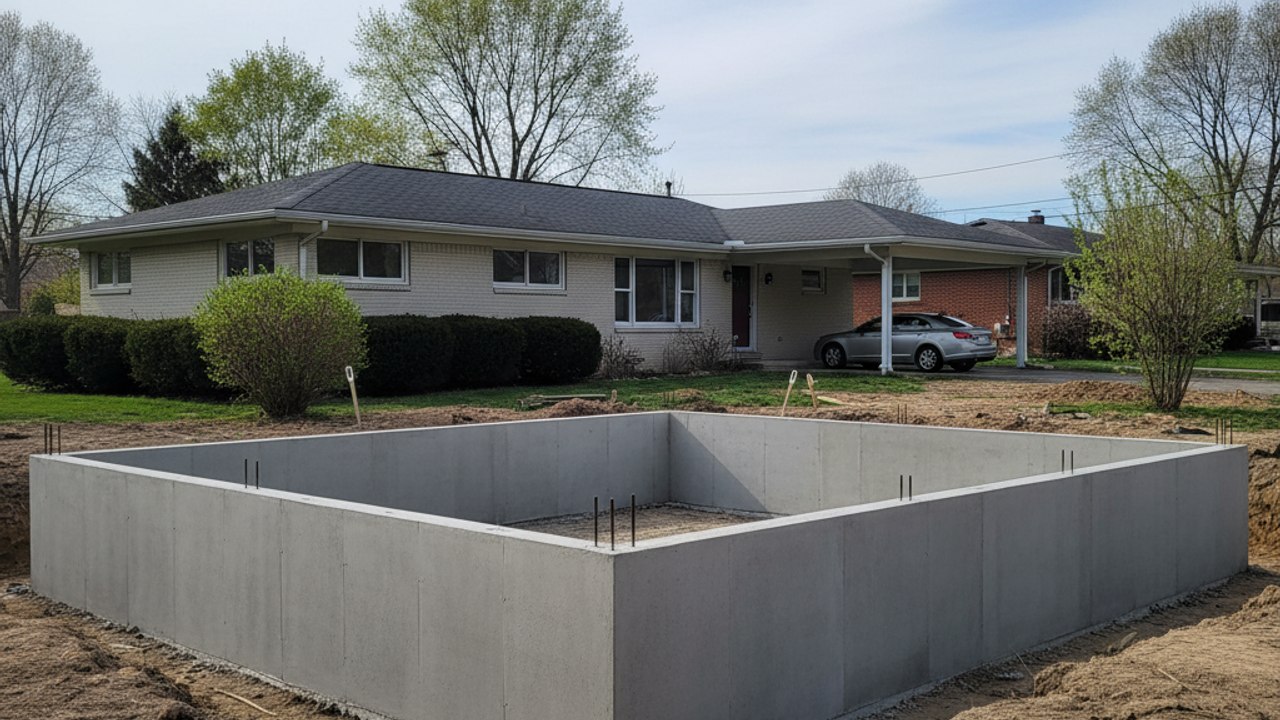
Sheds, garages and additions need a slab that's graded, compacted and reinforced for what's going on top of it. We check the sub-base before pouring, because a slab foundation that settles unevenly is a much bigger problem once there's a structure sitting on it.
Hairline cracks usually mean the slab moved a little and settled, and those get routed and filled so water doesn't get in and freeze. Bigger cracks, sunken corners or spalling from salt damage sometimes mean the section needs to come out and get repoured instead of patched.
Public sidewalks in front of your property often fall under city or town code for thickness and slope, and a cracked or heaved slab can turn into a violation notice. We pour to spec and can deal with the permit if your municipality requires one.
A retaining wall holds back soil on a slope or property line, and it fails when there's no drainage behind it, water builds up, and the wall leans or cracks. We install drain pipe and gravel backfill behind every wall we build so pressure doesn't build up where you can't see it.
If a slab is structurally sound but the surface is pitted, stained or spalling, a bonded overlay can give you a new finish for less than a tear-out and repour. It won't fix a slab with real structural cracks or heaving, that needs to come out instead.
Four steps, and no surprises in any of them.
You tell us what you want doing, we look at what is actually there, and we ask the awkward questions early.
In writing, itemised, free. If something might add cost later we flag it now rather than at the end.
Same crew throughout. We cover your floors, keep the dust down and tidy up before we leave each day.
You point out anything you are not happy with and we fix it before the invoice, not after.
We travel across the peninsula and into Nassau County for most of these jobs.
What tends to come up once a project actually gets scheduled.
Describe the problem and we will tell you what it probably is. No obligation.